
Homemade English muffins are surprisingly SO fun to make. There’s something so satisfying about cutting out the little rounds, watching them puff up and flipping them over to reveal those golden tops. Then you split one open, toast it and add butter while it’s still warm. That alone is a good reason to make a batch.
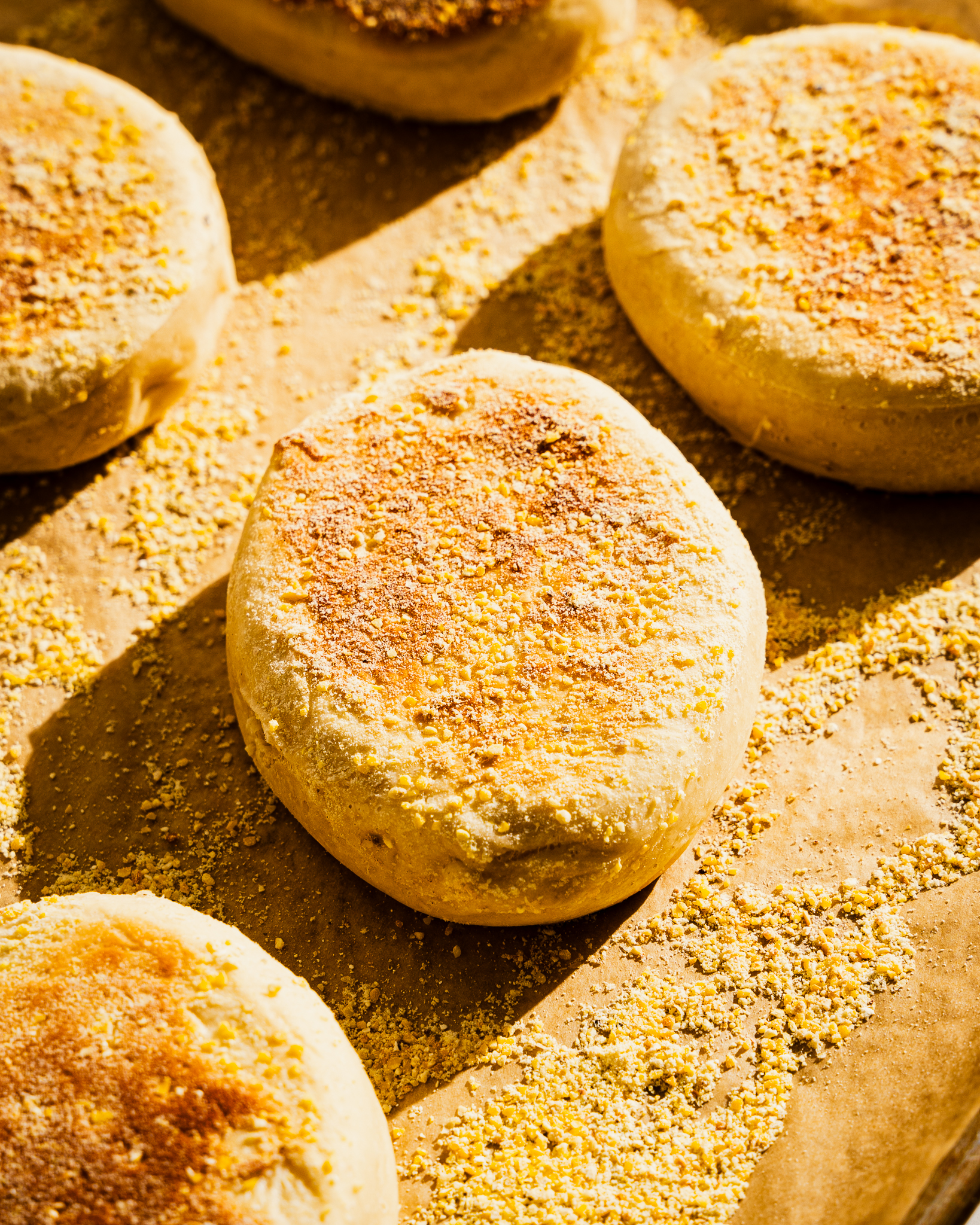
These English muffins have a soft centre, a lightly chewy exterior and plenty of edges to catch the butter once toasted. They cook gently in a skillet, then finish in the oven to make sure the centres are baked through.
This recipe makes approximately 16 English muffins. Keep a few for breakfast and freeze the rest, or use them to make a batch of breakfast sandwiches with chicken patties, egg and cheddar.
Making English muffins at home
English muffins are made with yeast dough, but their cooking method is a little different from a regular bread roll. A skillet gives them their familiar flat, golden surfaces, while the sides stay softer and lighter in colour.
For this version, the dough is rolled out and cut into rounds. It’s an enjoyable recipe to take your time with, especially on a morning when you can make a coffee and let the dough rise while you do something else.
You don’t need muffin rings or a special griddle. A round cutter and a heavy skillet work well.
Ingredients for homemade English muffins
- Whole milk: Adds richness and makes up the liquid in the dough. It should be lukewarm when mixed with the yeast.
- Instant yeast: Helps the dough rise and can be mixed directly into the recipe without a separate activation step.
- Granulated sugar: Adds a little sweetness to balance the flavour.
- Unsalted butter: Gives the muffins richness. Melt it and let it cool before mixing.
- All-purpose flour: Gives the dough structure. Start with the measured amount and add more gradually only if needed.
- Fine salt: Seasons the dough.
- Cornmeal or semolina: Keeps the rounds from sticking during their final rise and gives the outside its familiar textured finish.
Getting the dough consistency right
The dough should feel soft, elastic and slightly tacky after kneading. It should be manageable without feeling dry or stiff.
Start with 600 g flour and let the mixed dough rest for 10 minutes before kneading. This allows the flour to absorb the milk before you decide whether it needs more.
If it remains too sticky to handle after kneading, add flour one tablespoon at a time. Stop once the dough is manageable; you don’t need to remove every bit of tackiness.
How to make homemade English muffins
1. Mix and rest the dough
Combine the lukewarm milk, instant yeast, sugar and cooled melted butter. Add the flour and salt, mixing until no dry flour remains.
Cover and let rest for 10 minutes before kneading.
2. Knead and let rise
Knead until the dough becomes soft and elastic, adding a little flour only if needed.
Place in a lightly greased bowl, cover and let rise until roughly doubled. The timing will depend on the temperature of your kitchen.
3. Roll and cut
Gently roll the dough onto a lightly floured surface until approximately ½ inch thick. Cut into rounds, pressing the cutter straight down without twisting.
Gather the scraps gently and let them rest before rerolling. If the dough keeps springing back, give it a few more minutes to relax.
4. Let the rounds become puffy
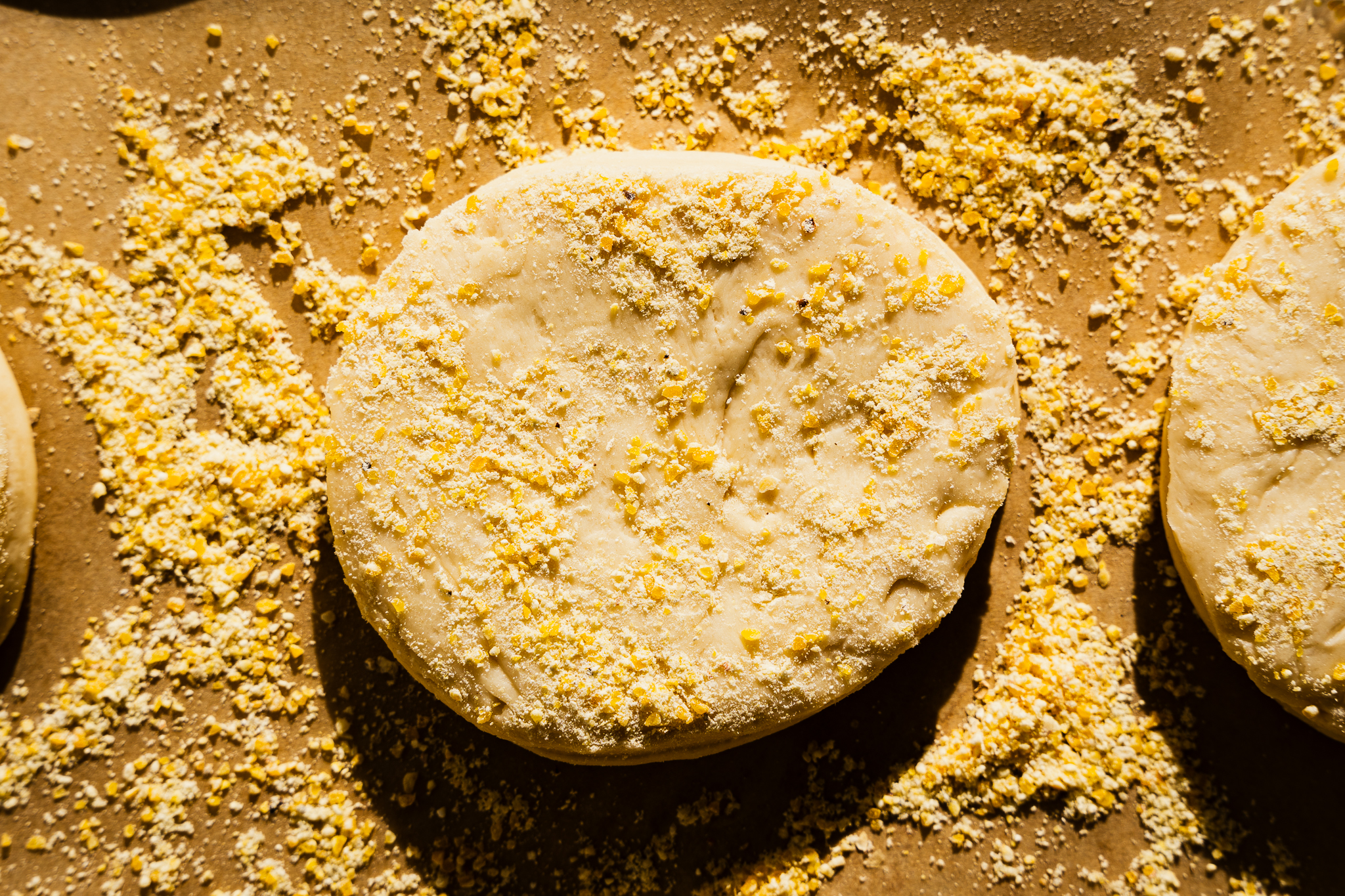
Place the rounds on cornmeal-dusted parchment and sprinkle the tops. Cover loosely and let rise until visibly puffy.
Try to handle them gently from this point so you keep the air developed during the rise.
5. Cook in a skillet
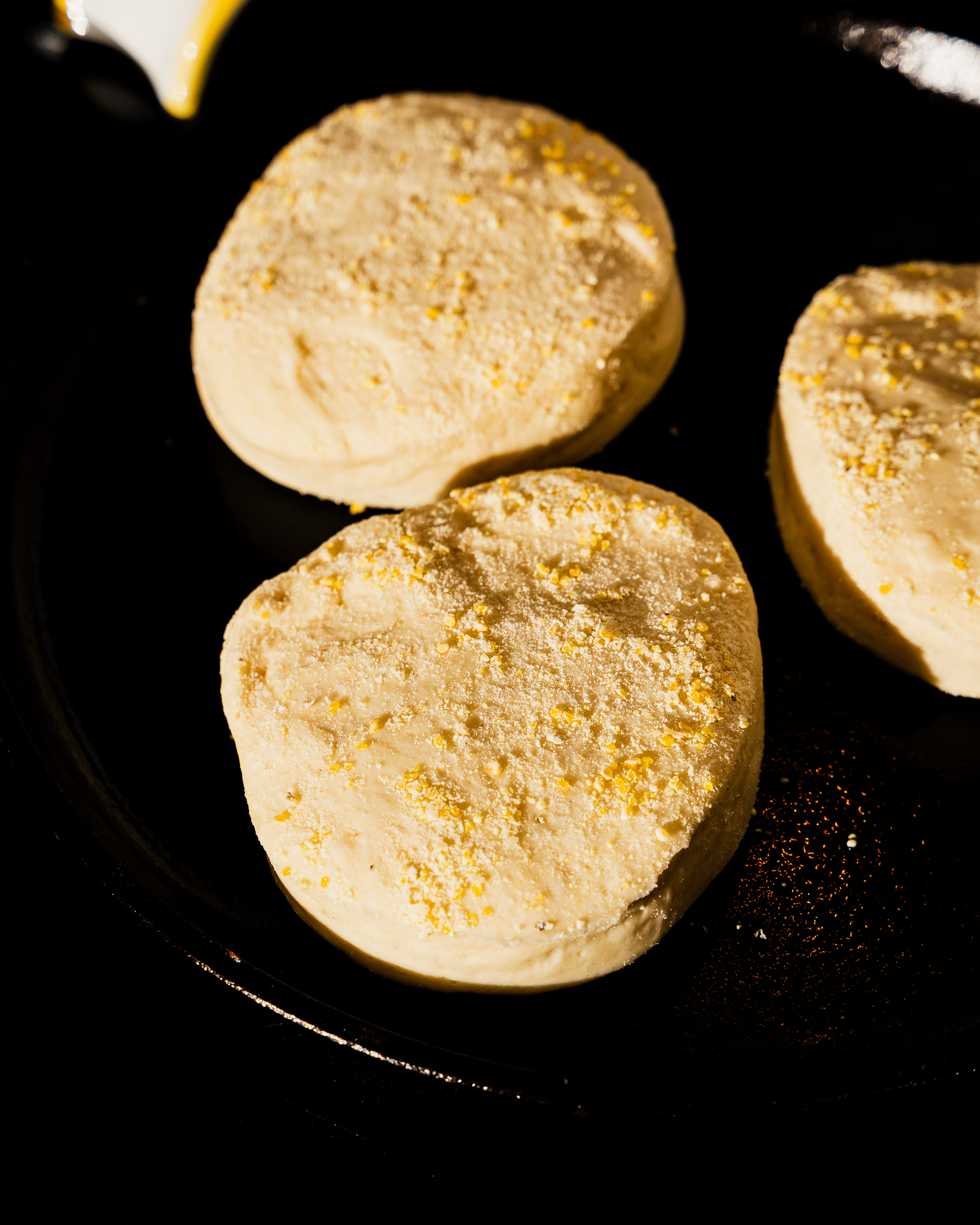
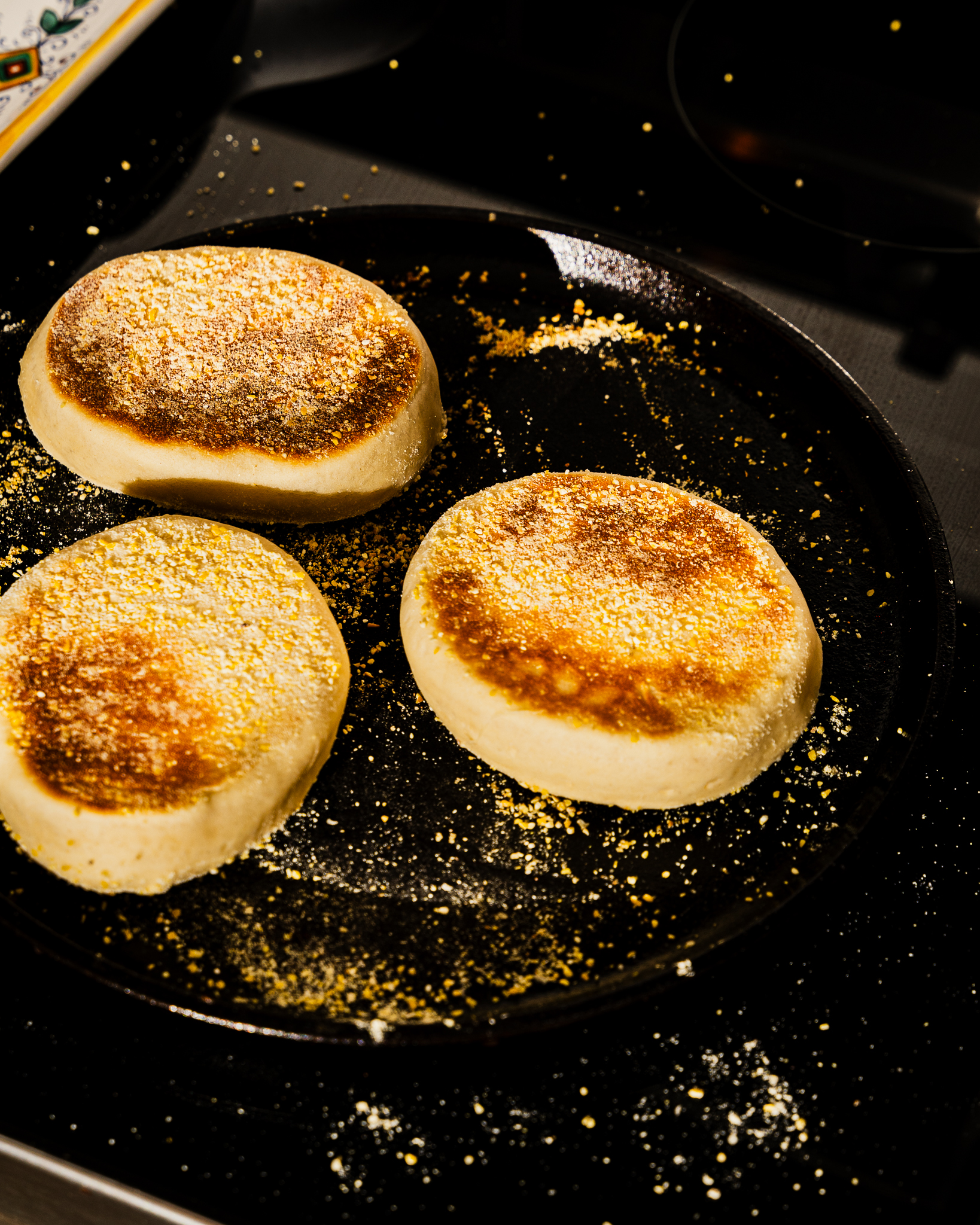
Warm a dry, heavy skillet over medium-low heat. Cook the muffins in batches until golden on both sides.
This is my favourite part of the process: seeing them turn from soft rounds of dough into something that looks like an English muffin.
6. Finish in the oven and cool
Transfer to a baking sheet and finish in the oven until the centres are cooked through.
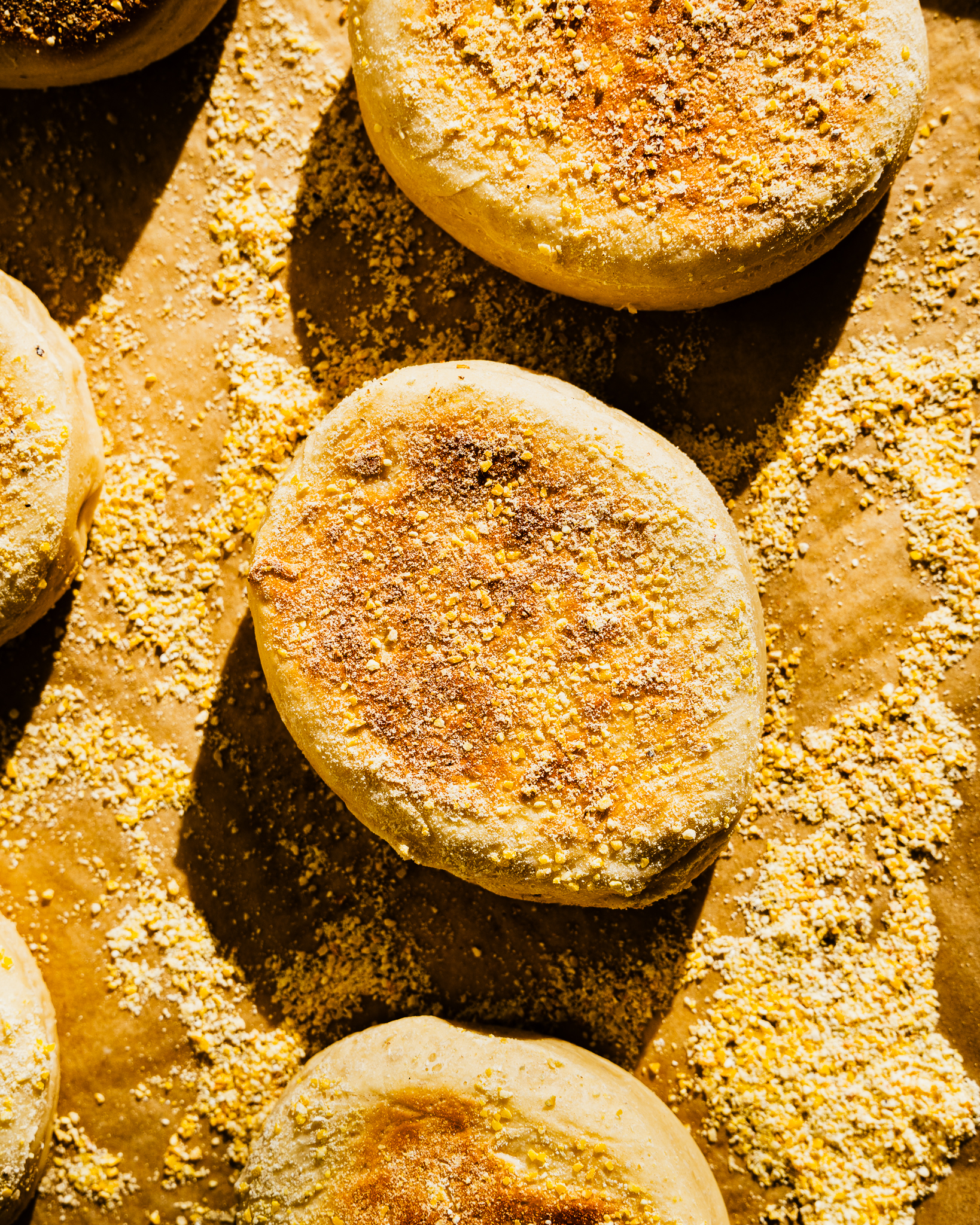
Let cool on a wire rack before splitting with a fork. Toast the halves until the edges are golden, then add butter, jam or your favourite breakfast toppings.
Tips for soft homemade English muffins
- Measure the flour by weight: Scooping flour into cups can pack in more than intended and make the dough too firm.
- Add extra flour gradually: Let the dough rest and knead before deciding it needs more.
- Watch the dough during rising: Look for roughly doubled dough during the first rise and puffy rounds during the second.
- Use a light hand when shaping: Avoid repeatedly working or compressing the scraps.
- Keep the skillet heat gentle: If the muffins darken quickly, lower the heat.
- Don’t press them down: Let them cook without flattening them with the spatula.
- Check the centres: A golden exterior doesn’t necessarily mean the middle has finished cooking.
Splitting English muffins with a fork
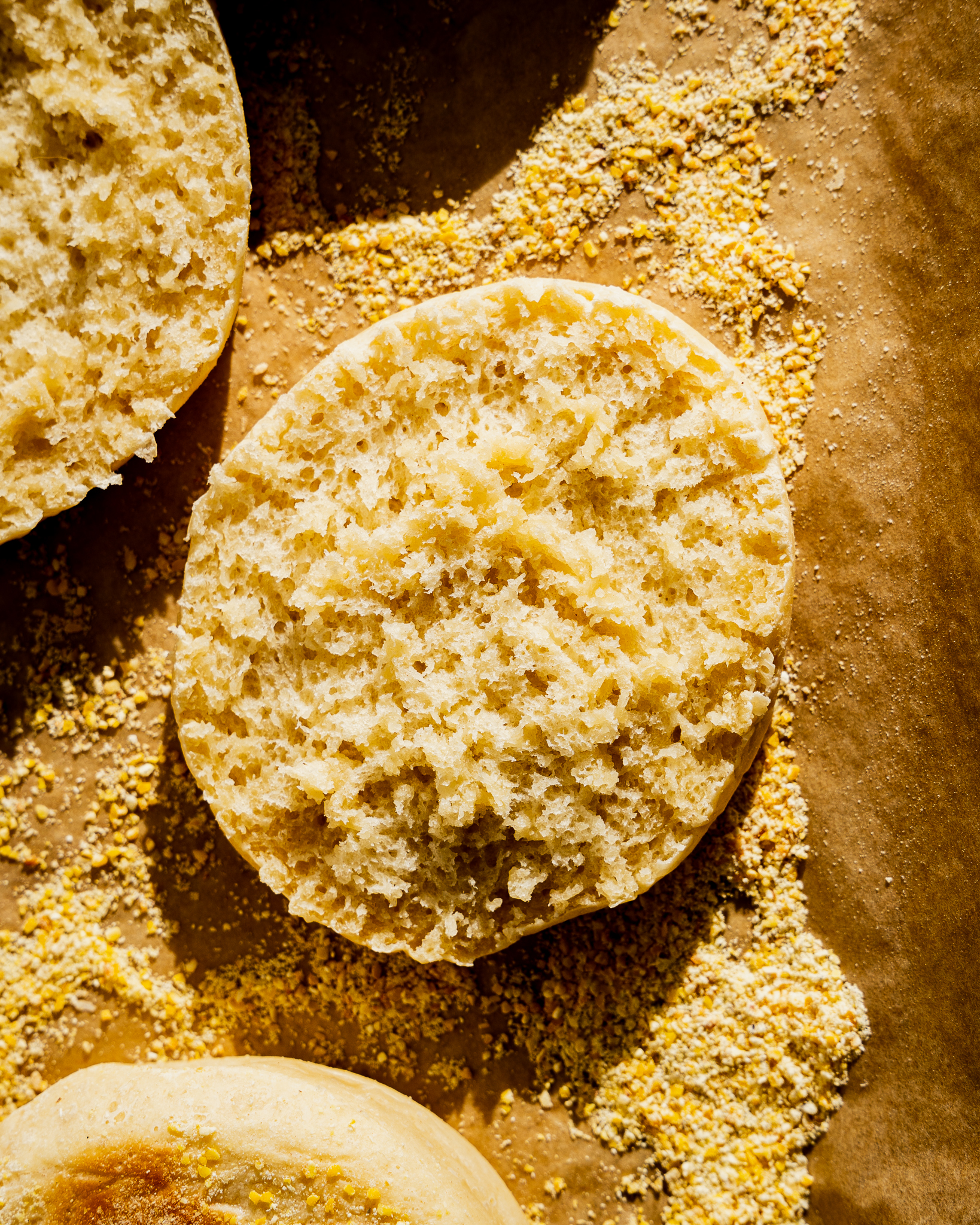
Instead of slicing straight through with a knife, poke a fork into the muffin all the way around its middle. Gently pull the halves apart.
This creates a rougher surface with little edges that become crisp when toasted. Let the muffins cool first so the crumb has time to set.
A breakfast staple to make ahead
A batch of English muffins gives you plenty of ways to put breakfast together throughout the week.
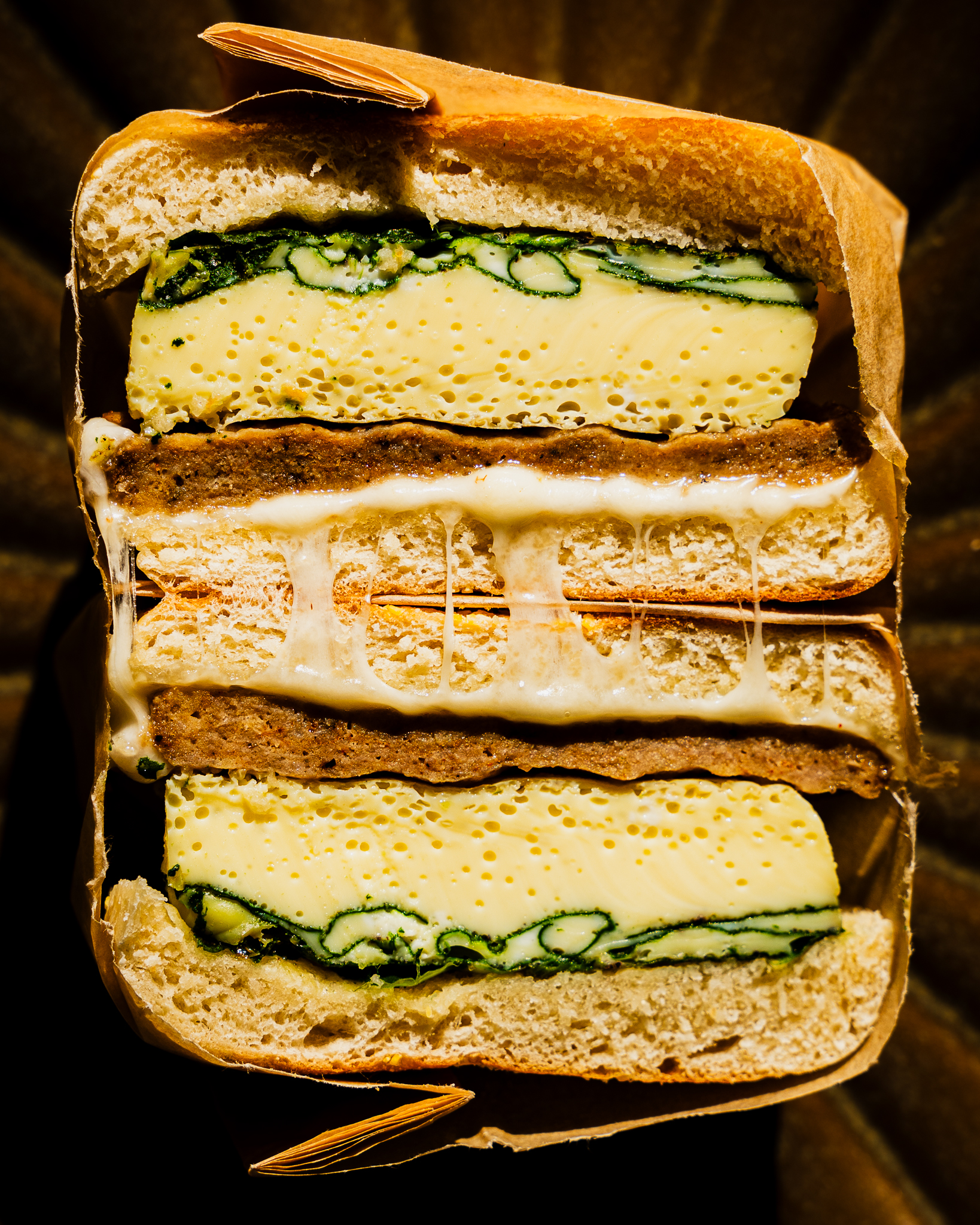
Toast one with butter and honey, add jam, or serve it with eggs. They also make a lovely base for breakfast sandwiches with chicken patties, egg and cheddar. You can find all my homemade butters here!
Once completely cool, keep them in an airtight container at room temperature for up to 2 days. For longer storage, split and freeze them with a small piece of parchment between the halves, then place in a sealed freezer bag.
Toast from frozen, adjusting the setting or giving them another short round as needed.
Frequently asked questions
Do I need English muffin rings?
No. This recipe uses a dough that can be rolled and cut into rounds before rising and cooking.
Can I use a glass instead of a round cutter?
Yes, provided it has a thin enough rim to cut cleanly. Lightly flour the rim and press straight down. A cutter will generally give you a cleaner cut.
Why is my dough too dry?
Too much flour can make the dough firm. Weigh the flour where possible and start with the amount listed, adding more only if needed after resting and kneading.
Why are my English muffins dense?
Too much flour, insufficient kneading, or not allowing enough time for the dough to rise can all contribute. Keep the dough soft and let the cut rounds become noticeably puffy before cooking.
Why are the outsides dark but the centres undercooked?
The skillet may be too hot. Lower the heat so the muffins brown gradually, then finish them in the oven as directed.
Can I freeze homemade English muffins?
Yes. Cool completely, split and freeze in a sealed freezer bag for up to 3 months for best quality.
Will I get exactly 16 muffins?
The yield depends on your cutter size and how thickly you roll the dough. An approximately 3-inch cutter with dough rolled to about ½ inch thick should give you around 16.
Homemade English Muffins
Equipment
- Large mixing bowl
- Digital kitchen scale
- Measuring cups and spoons
- Rolling Pin
- Baking sheets
- Thin spatula
- Instant-read thermometer
- Wire cooling rack
Ingredients
- 2 cups whole milk lukewarm
- 4½ teaspoons instant yeast
- 2 tablespoons granulated sugar
- ¼ cup unsalted butter melted and cooled
- 5 cups all-purpose flour spooned and levelled, plus more only as needed
- 2½ teaspoons fine salt
- ¼ cup cornmeal or semolina approximately, for dusting
Instructions
- Combine the lukewarm milk, instant yeast, sugar and cooled melted butter in a large mixing bowl or the bowl of a stand mixer.
- Add the 600 g flour and salt. Mix until a dough forms and no dry flour remains. Cover and rest for 10 minutes.
- Knead with a dough hook on low speed for approximately 7–9 minutes, or by hand for about 10 minutes, until soft and elastic. The dough should feel slightly tacky. If it remains too sticky to handle, add flour 1 tablespoon at a time, incorporating each addition before adding more.
- Transfer to a lightly greased bowl and cover. Let rise for 60–90 minutes, or until roughly doubled in size.
- Line baking sheets with parchment paper and sprinkle with cornmeal or semolina.
- Turn the dough onto a lightly floured surface. Gently roll to approximately ½ inch (1.3 cm) thick. Cut with a 3-inch round cutter, pressing straight down without twisting.
- Gently gather the scraps, cover and rest for 10 minutes before rerolling and cutting. Avoid kneading the scraps repeatedly.
- Arrange the rounds on the prepared sheets with space between them. Sprinkle the tops with cornmeal or semolina. Cover loosely and let rise for 30–45 minutes, or until noticeably puffy.
- Preheat the oven to 350°F (175°C). Warm a dry, heavy skillet or griddle over medium-low heat.
- Carefully lift the muffins with a thin spatula and transfer to the skillet without crowding. Cook for approximately 5–7 minutes per side, until golden. Adjust the heat as needed so they brown gradually. Do not press them down.
- Transfer to a baking sheet. Bake for approximately 8–12 minutes, checking earlier for thinner muffins, until cooked through. The centres should reach approximately 200°F (93°C).
- Transfer to a wire rack and let cool completely. Split by poking a fork around the middle of each muffin and gently pulling the halves apart.
- Toast before serving with butter, jam or your favourite breakfast fillings.

Leave a Reply